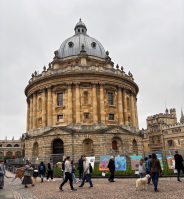
Full text of one of Aadi Arya Karthik submissions for a class at Oxford.
On “Before the Law”
The law is a cephalopodal organism whose concern is the doling out of legitimacy to those whom it has
appropriated to itself. It consists of such institutions as: the law of embodiment (expressed so pithily by
Althusser: “the trouble is, there are bodies and, worse still, sexual organs”1); the law of reference (that
every talking is a talking about something; that poetry, contra Mallarmé, is written with ideas and not
with words); and the law of equivalence (specifically, the association of all that is human-shaped with the
ideal-ego once misdiscovered in the mirror: with a self; and in this the establishment of a nobility-of-
what-is that might tend to the law, administer it, as in “The Problem of Our Laws”). It may be observed
that these are only the Real, Symbolic, and Imaginary under other names: the law is the complex which
the three registers fill out, the tangle of tentacles as which one encounters them.
Insofar as the I does not really fit into this regime (for the I is not the self, the subject, the body, nor any
weighted summation of the three), the law is a squeezing of the I out of the world. One of the clearer
accounts of this squeezing-out is given in, of all places, the Epistle to the Romans: “Yet, if it had not been
for the law, I would not have known sin. I would not have known what it is to covet if the law had not
said, ‘You shall not covet.’ But sin, seizing an opportunity through the commandment, produced in me all
kinds of covetousness. For apart from the law sin lies dead.”2 Under the law, and only by the
appropriative action of the law, I am a sinner; the law has marked out for me a place called sinner, and
will not be dissuaded from installing me there.
What Kafka has given in “Before the Law” is an account of the I under the regime of the law; no detail of
the parable is allegorical, every detail is from the lived experience of one who has apprehended their
appropriation by the law and the impossibility of any sort of escape from such. To be an I, a sinner, is to
have been made distant from the law: distant in the sense that one is denied conversation with it. To be an
I is also to have been turned to face the law; each doorkeeper, pace Derrida, is not before the law except
in the narrative of the I, which, like everything the I engages in, is easily seen through. The law is behind
each and every doorkeeper, bears them up in its appropriation of them, orders them, civilizes them. What
it does not situate within this order—indeed an order of, a hierarchy including every single humanoid
form in the world bar one—is the I.
Of course, the doorkeeper will not stop the I from simply walking through each door, coming to the law,
engaging it in conversation: bargaining with it for legitimacy. But if the I attempts this, it will be looked
at askance by each human being it passes: in the act of pursuing legitimacy so naively, so obtusely it will
already have declared itself entirely unworthy of legitimacy, will have excluded the possibility of
obtaining legitimacy from the law when the latter is finally come upon. The would-be-nobleman who
buys his title is after all no true nobleman in the end. In this way, the law forbids its approaching, by
ensuring that in any approach that which makes that approach worthwhile is abnegated.
There are really two topologies present in “Before the Law”: the topology of law, which is given
explicitly; and the topology of grace, which haunts the protagonist—the I—which is the something better
that makes possible the there has to be something better than this which the I must be clinging to. What
the I wishes to gain in its conversations with the doorkeeper—the beseechings of the latter, the bribes
given to the latter, the petulance directed at the latter—is precisely grace: a legitimacy attained in the
face-to-face encounter, not via appropriation as doorkeeper. Only give me someone to whom I may try to
prove myself, someone who in their judgment-making is visibly frighteningly capable; only let me present
my case to them and be judged by them, and I will accept what result I am given. The law is
incomprehensible, incoherent, arbitrary: partial, both in that it is biased and in that in its exertion of order
it does not quite stamp out what is rebellious, or rather ill-fitting, in the I—that is to say, the law fails at
being a true νόμος, a total ordering, a totalizing order. Grace, on the other hand, in its perfect particularity
—for the administration of grace is at the discretion of a person, that is, someone more purely human than
all of us half-animals—incorporates me in stripping me of any legitimate reason not to acquiesce to the
outcome of its decision as to my worthiness of legitimacy. Provided I can acknowledge that the person
administering grace knows my station, provided I am made remember in every moment of my life that I
cannot outthink them, I do not know better than them, there is simply no further struggle involved in a
being-what-I-am. What the doorkeeper is capable of doing is justifying the situation in which the man
from the country has found himself (and of course an I know better than you, provided it is convincing,
totally legitimate, is the only justification that can be given; it may then be said that the failure of the
topology of law is in its failure to confront the subject with perfect legitimacy, with perfection): and it is
this justification which the doorkeeper in deferring the decision of admission always avoids being roped
into giving.
It is this endless deferral which constitutes the second of three moments of the story (and two unspoken
moments that follow the story). The man from the country is first appropriated into the position before the
door and takes stock of his situation; and then some time is said to pass: most of a lifetime, in fact.
What is the nature of this wait? For Derrida, it is absorbed under deference-difference, but I think rather
more can be said in this particular case with the aid of (who else?) Lacan. The latter, in an écrit,3 presents
a sophism of the three prisoners: each participant is told that they have either a white or black disc
painted on their forehead (so that they cannot see their own but can see those of the other two), that at
least one of the discs is white, and that the first individual to determine non-probabilistically the color of
their disc will come to the door, explain their reasoning, and, if sound, be let free. All three participants,
in this instance, are given white discs. In the first moment—which Lacan calls the instant of the glance—
each participant notes that the discs they see are not both black (which would have implied immediately
that their own disc was white). What follows is a wait, which Lacan calls the time of comprehending:
each participant, realizing that no one else has moved, attributes to the other two the same realization they
made in the first instant, and so realizes that there is at most one black disc. Then, each participant
attributes to the other two this realization (which, if either of the other two participants had seen a black
disc anywhere, would have implied immediately that their own disc was white), realizes again that no one
has moved, concludes that their own disc is white, and makes haste for the door.
It is not a particularly deep logic puzzle, but the reasoning which is invoked in it—a logic based on time
rather than space—is quite curious: “What the suspended motions disclose is not what the subjects see,
but rather what they have found out positively about what they do not see.” In other words: each instant of
lack-of-motion is a lack which discloses the nonviability of some possibility: a lack-of-options. Slowly
each lie is stripped away until one has, however circuitously, come to the moment of honesty; Lacan’s
scheme is seen—though I’m not sure Lacan intended this—to be exactly parallel to Freudian
Nachträglichkeit. The instant of the glance is the observation of the primal scene, which is dormant for
the time of comprehending, and suddenly reemerges as neurotic symptom in the moment of concluding,
the realization and the ensuing rush for the door.
To be fair, Derrida does anticipate this scheme with one comment: the law, he says, is that “which is not
there but which exists.”4 In other words, that which ist nicht da in the sense of Da-sein, but ist da in the
sense of Dasein. The law, in cleaving Dasein down the middle, cleaves the subject; and it is exactly the
cleavage of the subject which engenders neurosis, and it is exactly the engendering of neurosis which is
effect of the scheme above.
What is most odd is that this exact scheme—first glance around, time passing, the final inverse-
anagnorisis and movement into neurosis proper—structures not only “Before the Law” (the anagnorisis
in which is the I’s realization of the absolute particularity of the law-topology which it is appropriated to,
the realization that it is the only I in the world) but also several other important stories: Hebel’s
“Unexpected Reunion,” apocryphally but not dubiously named Kafka’s favorite story;5 “Kleist in Thun”
by Walser—the better Kafka—my own favorite story; Bachmann’s Malina, my favorite novel; and, oddly
enough, the hagiography of Saint Mary of Egypt. “Kleist in Thun” and Malina, importantly, both succeed
not only in sketching the three-stage descent into neurosis, but also in gesturing toward the mythical
fourth and fifth stages of this process: the realization that, despite one’s coming to the end of one’s life,
one has failed to die—the realization that one will never die; and the final revision of the primal scene to
mean something else entirely, something I have tentatively identified as the giving of virginity which
brings about the action in virgin-martyr hagiographies, insofar as virginity is the only discovered entity
which one can have without having been given (and indeed the struggle to keep hold of this originary
wholeness is the drama of the virgin-martyr hagiography). Of course, this all calls for further analysis;
there are threads here that demand knotting together which I have not yet figured out how to knot together.
——
1 Louis Althusser, The Future Lasts Forever, trans. Richard Veasey, ed. Olivier Corpet, Yann Moulier Boutang
(The New Press, 1993), 36.
2 Romans 7:8-9.
3 The account here follows Jacques Lacan, “Logical Time and the Assertion of Anticipated Certainty,” in Écrits,trans. Bruce Fink (W.W. Norton, 2006), 161-176.
4 Derrida, “Before the Law,” 205.
5 See e.g. Johann Peter Hebel, The Treasure Chest, trans. John Hibberd (Libris, 1994), ix.
 Aadi Arya Karthik